
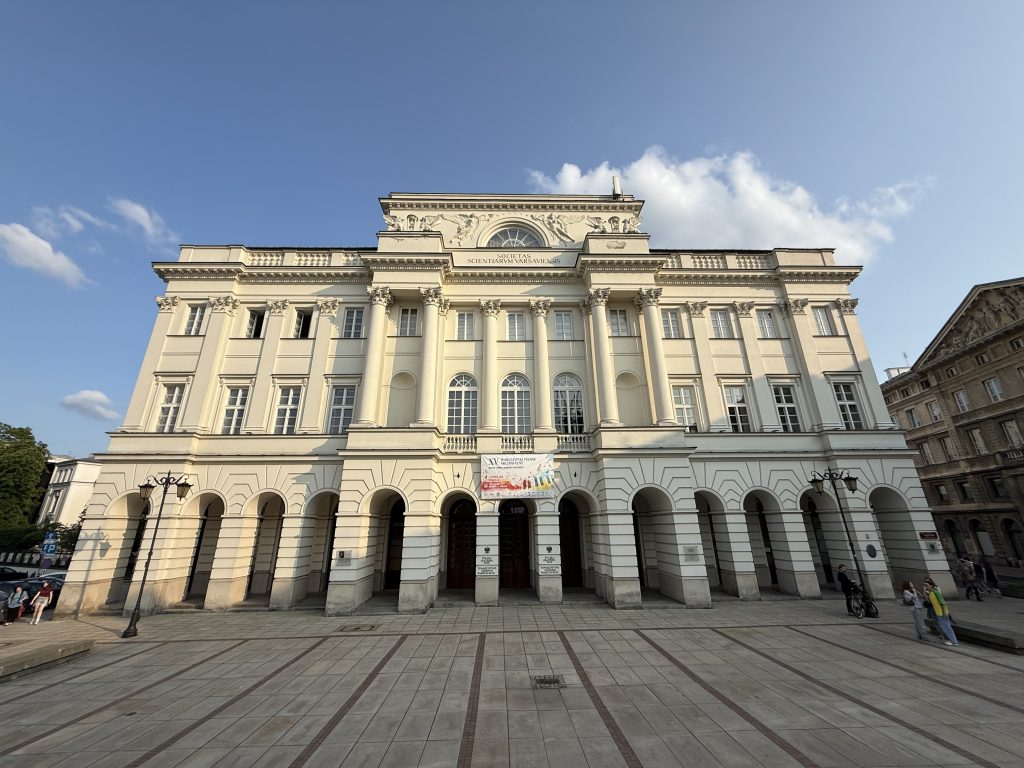
This bilateral project financed by PAN and CNRS (International Emerging Actions framework) creates a space for scientific dialogue and academic exchange to develop new knowledge about the rise and development of conservative ideas and movements in Europe and beyond, with special focus on Poland and France.
Abstract
In recent years, a growing body of scholarly literature has been devoted to the rise of illiberal and/or far right actors, ideas, and political regimes in a variety of countries and regions. Though this is a quickly expanding field of research, four gaps can be identified. First, it has developed in various subfields of research – social movements, party politics, regime change (de-democratization), history of ideas, political theory, political economy – with little attempts at integrating their respective findings. Second, the field lacks transnational and comparative approaches, resulting in a collection of national case studies, without a broader understanding of the potential flows of ideas, actors, repertoires, and money between them. Third, it relies on concepts such as “illiberalism,” “far right,” or “(populist) radical right,” which often results in a lack of understanding of the relational dimension of the “mainstreaming” of the far-right, by failing to consider the role of “mainstream” (i.e., non-populist, conservative, or far-right) actors in the analysis. Four, it focuses on institutional actors, and seldom considers the role of intellectuals and social movements backing them.
This bilateral project financed by the Polish Academy of Sciences and the French National Centre for Scientific Research (International Emerging Actions framework) seeks to create a space for scientific dialogue and exchange that will be more long-lasting than one-time conferences, and will have the potential to strengthen existing cooperation, develop new projects, and, ultimately, result in groundbreaking knowledge about the rise and development of conservative ideas and movements in Europe and beyond with special focus on France and Poland. It seeks to move beyond disciplinary and area specialization, to design a new analytical framework that is both interdisciplinary and comparative.
We aim to investigate three main questions:
- To what extent can we say that the conservative mobilizations that resulted in the establishment of so-called illiberal regimes in Hungary and Poland are driving a state-building process that diverges from the liberal democratic blueprint?
- How can we comprehend the historicity and longue durée of the current “illiberal turn”? Can we trace its roots to the legacy of interwar fascism and nationalist movements? Is it a mere reaction to or “backlash” against social changes that originate in the 1960s? Or is it a new phenomenon that requires different analytical lenses?
- To what extent is it a transnational phenomenon? What are the flows of ideas, actors, repertoires, and money between different countries?
We organized a workshop in Warsaw: Organizers: Valentin Behr and Marcin Ślarzyński, Conservative mobilizations: Intellectuals, Movements, and the State. Workshop co-organized by Polish Academy of Sciences (PAN), the National Centre for Scientific Research, France (CNRS), the European Center of Sociology and Political Science (CESSP) and IFiS PAN. Warsaw, 16-17.05.2024.