
As the team conducting the NCN project “Electoral dynamics during democratic backsliding: Parties, voters and changing lines of conflict”, we are pleased to invite you to a paper presentation by
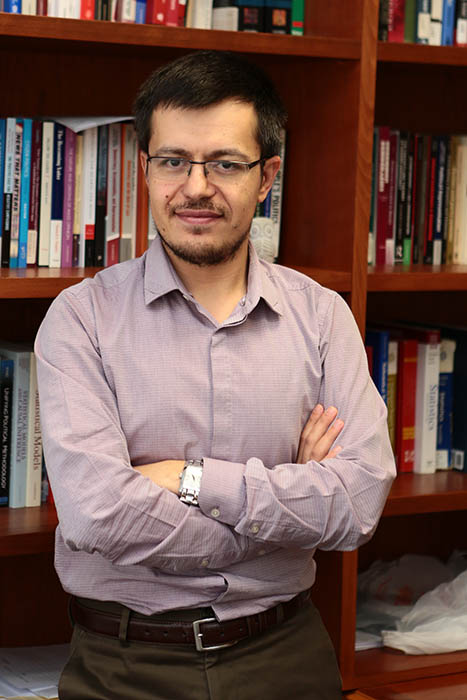
Selim Erdem Aytaç
Associate Professor at Koç University, Istanbul
Affective Polarization and Punishing Democratic Violators: Experimental Evidence from Turkey
Democratic backsliding has emerged as a global concern, characterized by widespread erosions in political rights, civil liberties, and electoral integrity. While scholars have theorized that rising affective polarization in many countries contributes to this trend, evidence linking affective polarization to democratic erosion remains mixed. In this study we provide experimental evidence of a causal link between affective polarization and democratic erosion. Drawing on a large, nationally-representative survey in Turkey, we combine depolarization interventions with a candidate conjoint experiment, and show that reducing affective polarization strengthens citizens’ willingness to punish politicians who violate democratic norms, despite no apparent change in democratic attitudes. These effects are consistent across government and opposition supporters and robust across different types of democratic violations. Our findings suggest that affective polarization contributes to democratic backsliding by weakening electoral accountability rather than by eroding democratic values, offering new insights into the mechanisms of contemporary democratic decline.
The talk will take place on Tuesday, October 28th at 13.30 at the Institute of Philosophy and Sociology of the Polish Academy of Sciences (IFiS PAN), Room 154. The seminar is part of the NCN SONATA Project (Nr. 2022/47/D/HS5/03185), “Electoral dynamics during democratic backsliding: Parties, voters and changing lines of conflict”.
Selim Erdem Aytaç is Associate Professor of International Relations at Koç University in Istanbul, Turkey. He holds a Ph.D. in Political Science from Yale University. He researches political behavior with a focus on electoral accountability and political participation. His work has been published in the American Political Science Review, Journal of Politics, British Journal of Political Science, and Comparative Political Studies, among others. He is also the co-author (with Susan Stokes) of Why Bother? Rethinking Participations in Elections and Protests (Cambridge, 2019).